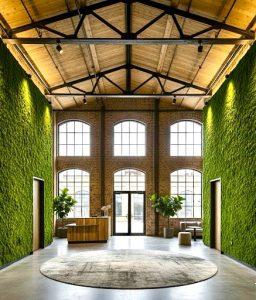
Two, floor to ceiling moss walls flank the biophilic entryway of Luxury Lofts in a repurposed industrial building.
As companies rethink their interiors to support employee well-being, creative focus, and stronger brand identity, biophilic design has emerged as one of the most effective strategies for improving the experience of built environments. Natural textures, organic forms, and visual references to the living world help counterbalance the demands of fast-paced workplaces and highly digital workdays.
At The Fat Plant Society, we believe that real, responsibly harvested moss is uniquely positioned to meet these needs, offering commercial clients a highly effective—and environmentally responsible—material for modern interiors.
Why Moss Walls Enhance Workplace Experience
Moss installations have become increasingly common in commercial environments because they influence how people feel and perform in the spaces where they work. The organic texture, tactile softness, and natural color variations of real moss create a visual anchor that brings a sense of calm to offices, lobbies, conference rooms, and hospitality settings. These qualities help reduce stress and visual fatigue, offering an immediate sense of comfort that aligns with the principles of biophilic design.
Beyond their visual impact, moss walls contribute to acoustic comfort—a crucial but often overlooked element of workplace design. Their dense, fibrous surface helps absorb sound and reduce reverberation, leading to quieter, more focused environments. Whether used in open-plan offices, collaborative areas, or guest-facing spaces, moss installations help create environments where people can think clearly, communicate effectively, and feel at ease.
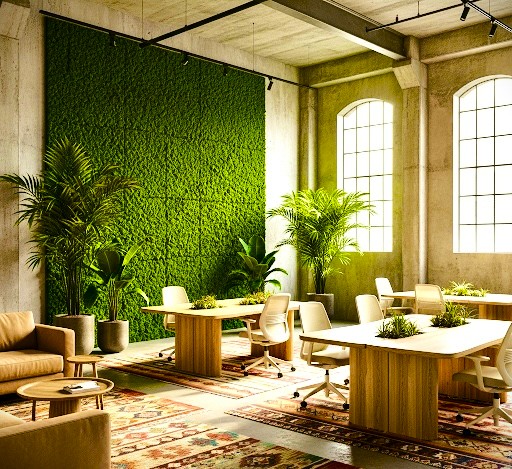
Box Wall, a floor-to-ceiling design by The Fat Plant Society, is the focal point in the modern office in a repurposed industrial building.
Sustainable Procurement: A Non-Negotiable for Modern Brands
Today’s commercial clients are increasingly expected to demonstrate environmental responsibility in both operations and design decisions. Selecting materials that align with sustainability goals is no longer optional—it has become central to building trust with customers, employees, and stakeholders.
This is why responsible sourcing is foundational to every project at The Fat Plant Society. We work exclusively with American-grown and harvested moss from suppliers who follow careful ecological practices. This includes avoiding overharvesting, protecting surrounding plant communities, and ensuring that moss regrowth cycles are respected. By choosing regional sourcing over imported product streams, we help reduce transportation emissions and support a more resilient, local supply chain. We may be a little biased, but we have noted that American-grown and harvested moss is stronger, sturdier, more lush, and colorfast than the mosses we imported in our early days of business.
For commercial clients, this means that adding biophilic elements to their workplace becomes not only a design enhancement but also a tangible reflection of their environmental commitments. A moss wall becomes a statement of integrity—an aesthetic feature that simultaneously reinforces ecological responsibility.
Moss Installations as a Brand Experience
In commercial interiors, every design choice communicates something about a company’s values. Moss walls—particularly those created with natural, responsibly sourced materials—offer an opportunity to express care, creativity, and sustainability in a single gesture.
A moss installation placed in a lobby or shared area can set the tone for a guest or employee’s entire experience of the space. The organic forms and natural textures immediately signal a commitment to well-being and to thoughtful, environmentally sensitive design. In workplaces where brand experience matters—corporate offices, hospitality environments, wellness spaces, and customer-facing businesses—moss installations offer a distinctive way to stand out and design may be tailored to the brand, culture, and/or aesthetic of the existing design elements.
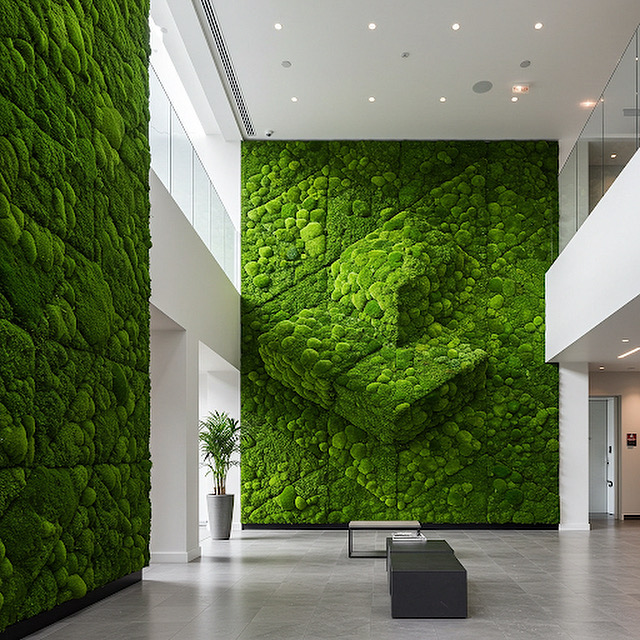
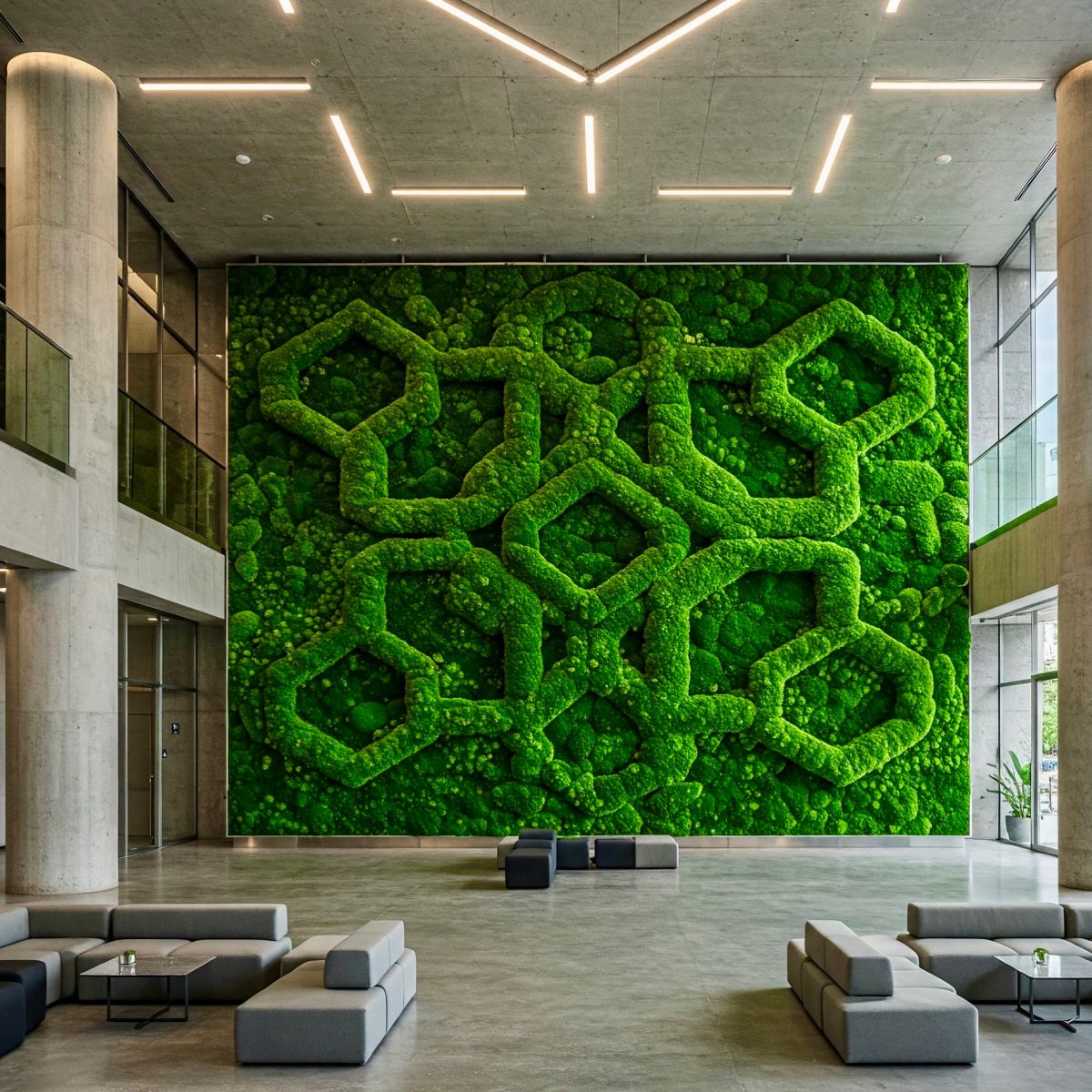
Escher Cubes, an original design by The Fat Plant Society that features two floor-to-ceiling moss walls for a corporate lobby renovation.
For those interested in seeing past examples, project highlights, and announcements are available on The Fat Plant Society’s news page and website portfolio, providing a closer look at how moss design functions across different commercial contexts.
Low-Maintenance, High-Impact Design
Commercial clients often seek biophilic elements that support long-term value without adding operational complexity.
Moss walls offer an ideal balance: they provide the visual and sensory advantages of nature-based design without the maintenance demands of living plant systems.
Because preserved moss does not require watering, soil, irrigation, fertilization, or ongoing horticultural care, it is a practical and resource-efficient alternative to living green walls. This supports sustainability goals while reducing maintenance budgets over time—an important consideration for organizations managing large properties or multiple facilities.
A Step Toward Corporate Environmental Leadership
More companies are recognizing that their built environments play a direct role in how people feel, work, and connect to the organization. By integrating natural materials sourced with ecological care, businesses can strengthen well-being, improve acoustics, elevate brand identity, and model environmental stewardship through the very spaces they inhabit.
At The Fat Plant Society, we are committed to helping organizations create interiors that reflect these values. Through responsible sourcing, thoughtful design, and a dedication to sustainability, we aim to support workplaces that foster both human well-being and ecological respect. For commercial clients seeking meaningful ways to integrate nature into the built environment, real, ethically harvested moss offers a graceful and impactful path forward.