
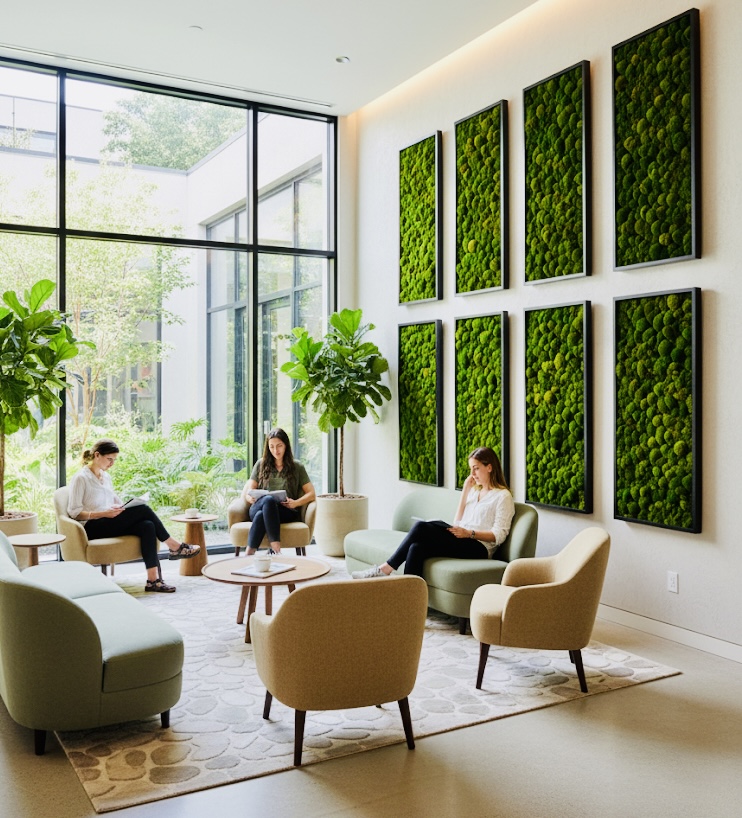
You may have heard this before, but it is true: we spend nearly 90% of our time indoors. As our urban environments become more digitized, clinical, and absent of color, the human need for a connection to nature—known as biophilic design—has transitioned from “nice to have” to a functional necessity.
While potted plants and living walls are popular choices and beautiful, they often come with high water bills, expensive irrigation systems, and the risk of plant failure. Maintenance-free moss enhances interiors, providing the warmth of organic texture without logistical headaches.
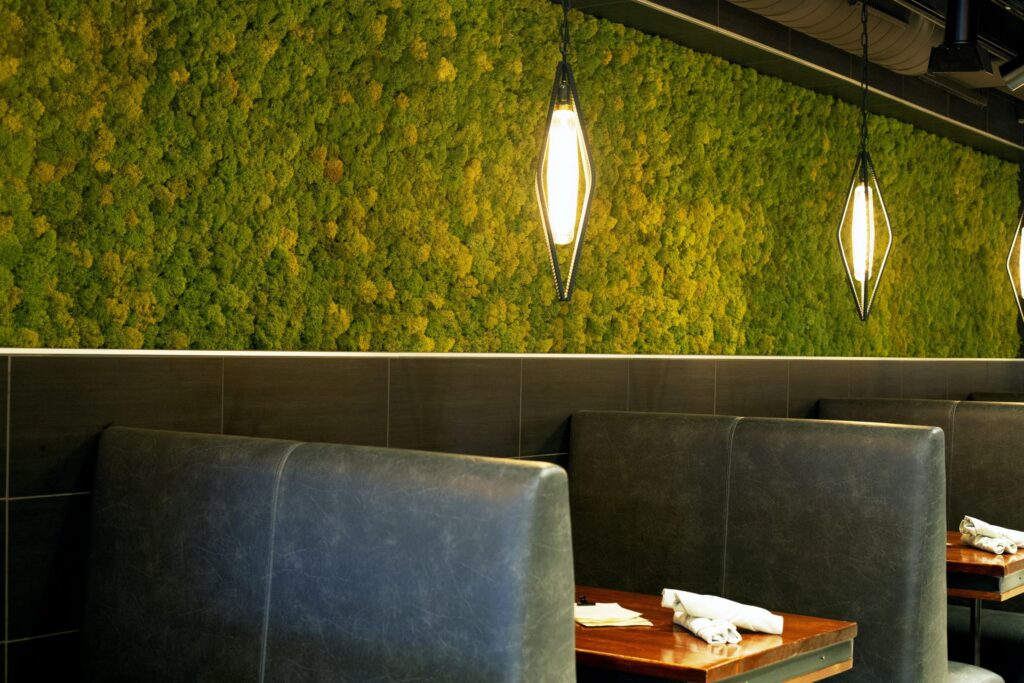
Bridging Nature and Architecture with Preserved Moss
Biophilic design is more than just “adding plants.” It is the practice of creating a physical environment that mirrors nature’s inherent logic to improve well-being. That’s why we have linked to Terrapin Bright Green’s 14 Patterns of Biophilic Design. And we cannot help but mention that in 2024, they added a 15th pattern: AWE. That’s where moss walls truly fit the bill.
Biophilic elements have demonstrably real, measurable
benefits for human performance metrics such as productivity,
emotional well-being, stress, learning and creativity. More than 90% of
a company’s operating costs can be linked to salaries and benefits; and
financial losses due to absenteeism and presenteeism account
for 4%.[email protected] | TerrapinBG.com /Publications
Preserved moss walls, panels, and frames are the perfect marriage of form and function. They offer a lush, vibrant green aesthetic that requires no sunlight, no soil, and absolutely no water. These installations act as “art that breathes with the room,” grounding a space in a way that synthetic alternatives simply cannot match.
The Science of “Maintenance-Free”: How It Works
The most common question regarding these installations is, “Is it actually real?”
The answer is yes. Unlike plastic or “silk” replicas, this is real, natural moss that has been harvested at its peak.
The secret lies in a specialized preservation process. The natural sap within the plant is replaced with a bio-degradable, plant-based glycerin solution. This “freezes” the moss in a state of permanent dormancy. It remains soft to the touch and retains its vibrant color for years, but it no longer grows or requires any biological upkeep.

Moss wall by The Fat Plant Society
Addressing Top Concerns: Longevity, Placement, and Wellness
When investing in interior greenery, sustainability and longevity are paramount. Here is how maintenance-free moss stands up to common concerns:
-
Longevity: When kept away from direct UV rays and harsh HVAC vents, quality moss panels can maintain their beauty for 10 years or more. We have been creating moss walls and designs for a decade now and our original pieces are as green today as they were the day we created them.
-
Low-Light Solutions: One of the greatest benefits of dormant moss is its ability to thrive where other plants die. It is the ideal solution for windowless conference rooms, basement offices, or dark hallways.
-
Acoustic Performance: Beyond aesthetics, moss has incredible acoustic benefits. The dense, branch-like structure of Reindeer moss and the thick pile of Pillow moss are naturally designed for sound absorption, making them excellent for reducing echo in open-plan offices or high-ceiling lobbies.
- Air Quality: No, moss does not put forth oxygen like potted plants but they do absorb VOCs (volatile organic compounds) in the air. Its unique anatomy enables it to act as a passive bio-filter for Volatile Organic Compounds (VOCs) and other atmospheric pollutants.
How Moss Absorbs VOCs
The mechanism by which moss interacts with VOCs differs significantly from vascular plants (like ivy or lilies). Rather than “breathing” them in through stomata to be metabolized, moss utilizes its high surface area and specialized cell structure:
-
High Surface-to-Volume Ratio: The intricate, branching structure of mosses provides a massive surface area relative to their size. This physical “trap” makes them highly efficient at capturing particulate matter and gaseous contaminants through simple diffusion and physical entrapment within the leaf clusters and cell walls (Benítez et al., 2021; Keyte, n.d.).
-
Hygroscopic Properties: Even in its preserved or “dormant” state, moss remains hygroscopic, meaning it absorbs and releases moisture from the air to maintain equilibrium with the room’s humidity. As the moss pulls in microscopic water droplets from the air, it simultaneously traps the pollutants (like VOCs) dissolved within or attached to those droplets (Esteban et al., 2024; Keyte, n.d.).
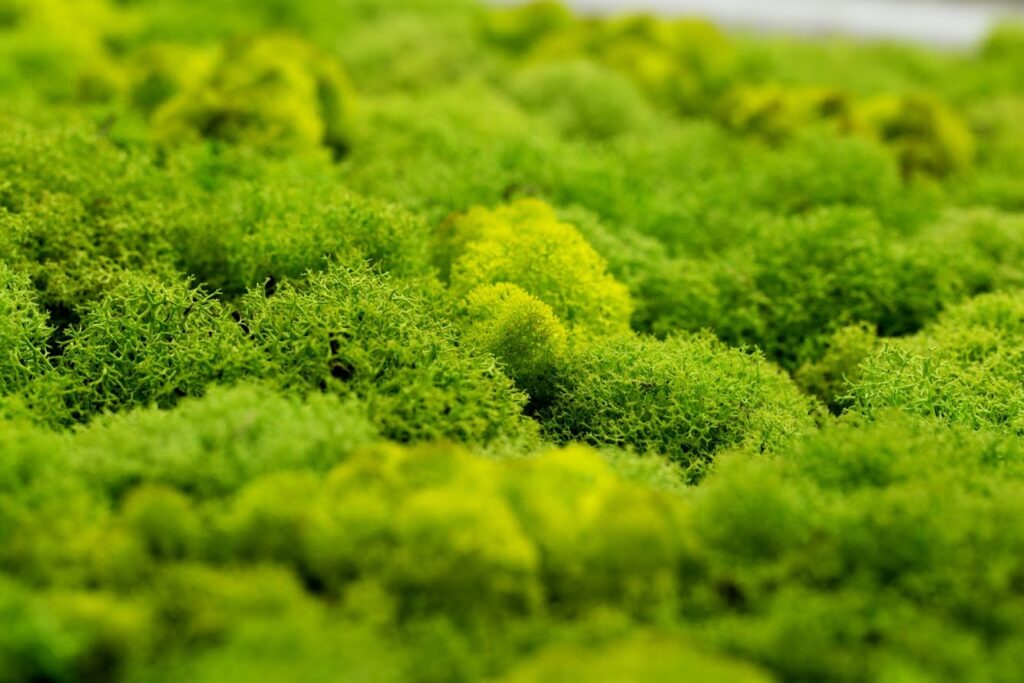
Close up of The Fat Plant Society’s American grown, spring green, reindeer moss.
Best Practices for Your Moss Installation
Maintaining your installation is incredibly simple. Basically, moss needs what humans need in terms of a comfortable environment:
-
Humidity Matters: Moss is hygroscopic, meaning it interacts with the moisture in the air. To keep the moss soft, maintain an indoor humidity level between 40% and 60%.
-
No Watering: It may feel counterintuitive, but watering or misting preserved moss will actually wash away the preservation solution and cause the moss to degrade.
-
Sustainable Sourcing: We use exclusively American-grown moss which significantly reduces the carbon footprint of your project and ensures that the materials are harvested with respect for surrounding plants and regrowth.
Why Designers are Moving Toward Moss
Architects and designers are increasingly turning to moss because it offers a “set and forget” alternative to living walls. It provides an immediate, high-impact organic form that doesn’t require a plumbing contractor or a monthly landscaping fee.
Furthermore, beyond the visual appeal, preserved moss acts as a passive bio-filter. Because it lacks a thick waxy cuticle, it can absorb Volatile Organic Compounds (VOCs) and particulate matter from the air through its hygroscopic properties—trapping pollutants within its intricate structure.
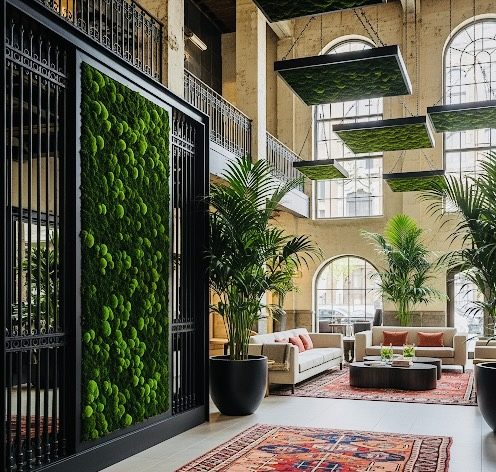
Design for an adaptive reuse for an industrial building that includes moss ceiling panels along with a moss wall.
At The Fat Plant Society, we have spent the last decade championing this balance of nature and architecture.
When we were founded in 2016, biophilic design was a burgeoning concept; we chose to be early advocates for real, maintenance-free greenery because we believed in its long-term benefits for wellness and interior harmony.
As we celebrate our 10-year anniversary, we are proud to see these principles becoming a standard in modern design. Our studio remains dedicated to the Danish design ethos—creating timeless, organic installations that support cognitive health and environmental sustainability. Whether you are looking to improve the acoustic performance of a workspace or bring a bit of the forest into a high-rise for the awe-factor, we are honored to continue greening the path forward for the next decade and beyond.